What this book guide tells you
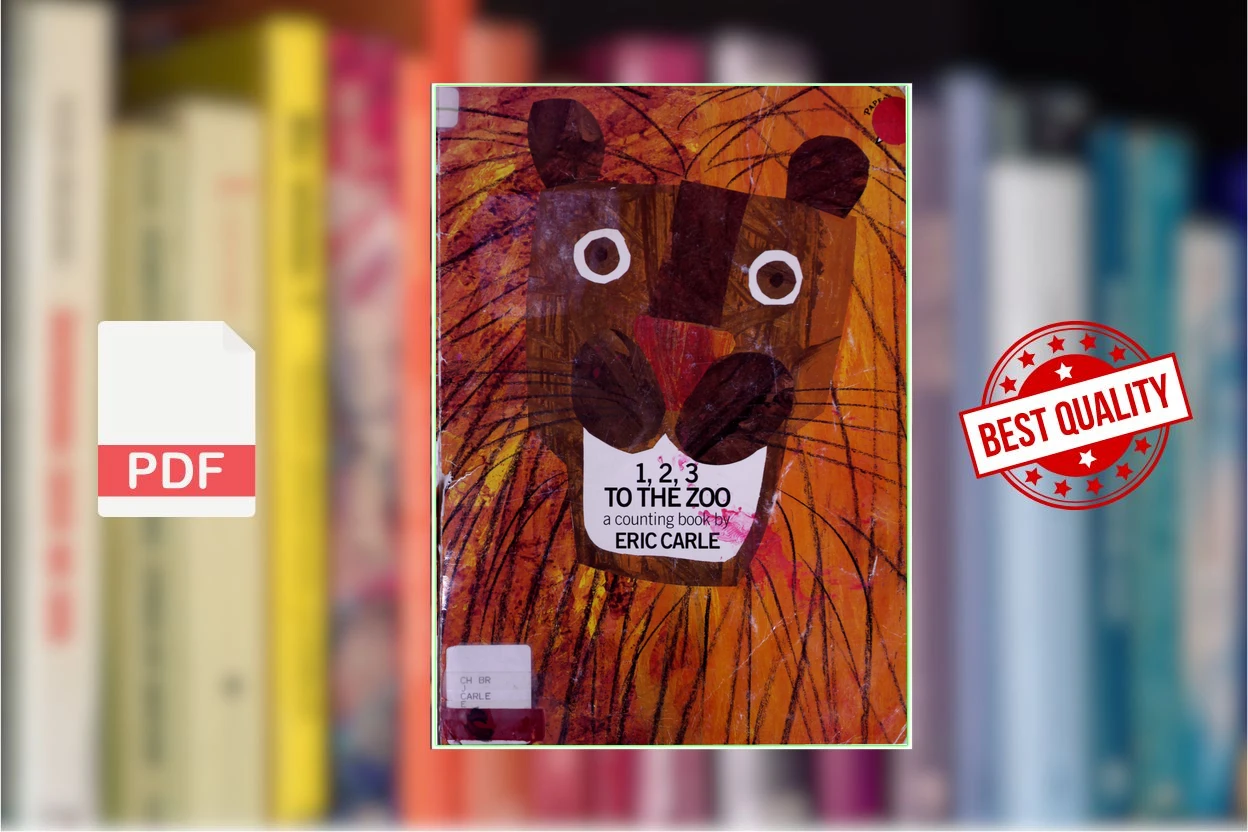
First published in 1968, 1, 2, 3 to the Zoo marked the landmark authorial debut of legendary author-illustrator Eric Carle, arriving just one year before his iconic classic The Very Hungry Caterpillar. This beloved, nearly wordless counting adventure takes young children on a colorful railway journey where a cheerful steam locomotive pulls an ever-expanding train of wild animals heading to their new home at the zoo.
Beginning with one mighty elephant in the first freight car, the procession steadily builds across each vibrant spread: two hippos, three giraffes, four lions, five bears, six crocodiles, seven seals, eight playful monkeys, nine slithering snakes, and ten brilliantly plumaged birds. Carle crafts each animal using his signature hand-painted tissue paper collages, filling every page with rich textures, expressive brush strokes, and bold, high-contrast color palettes that instantly engage toddlers and preschoolers.
What elevates 1, 2, 3 to the Zoo into an educational masterclass are its ingenious visual teaching mechanics. Along the bottom margin of each spread, a miniature graphic freight train adds a new car with every turn of the page, offering children an intuitive, concrete demonstration of addition and ordinal sequence. Simultaneously, a tiny, mischievous mouse hitchhikes along the journey on every page, creating an interactive seek-and-find challenge before the entire menagerie arrives at the vibrant panoramic zoo finale.
What the title delivers
Eric Carle's foundational 1968 counting classic (numbers 1–10), 10 animal-filled freight cars, an intuitive cumulative train tracker, and a hidden mouse seek-and-find game that builds early STEM confidence.
What to verify
Because visual picture books rely on vibrant full-color spreads and landscape orientation, verify the seller's specific digital file format (such as fixed-layout EPUB or high-resolution PDF) and device compatibility before purchase.
Wordless and minimal-text picture books remove the pressure of early phonetic decoding, empowering toddlers and preschoolers to practice dialogic reading, one-to-one counting, and independent visual storytelling from their very first book experiences.
Who this title may suit
1, 2, 3 to the Zoo is tailored specifically for infants, toddlers, and preschoolers (approximate ages 1 to 5) who are developing initial number sense, color recognition, and animal vocabulary. Because the pages contain no dense prose or complex sentences, the reading experience is driven entirely by child-led observation, pointing, and shared verbal interaction.
This makes the book exceptionally valuable for several distinct reading contexts:
- Parents and Caregivers: Ideal for interactive lap reading and bedtime routines where you can pause, ask open-ended questions, mimic animal sounds (from lion roars to elephant trumpets), and hunt for the hidden mouse together.
- Early Childhood and Preschool Educators: A staple for nursery school and kindergarten circle time, perfectly supporting early math curricula focused on number sequences, one-to-one correspondence, and cardinal values up to 10.
- Speech and Language Pathologists: The open-ended, wordless structure provides an ideal clinical and developmental tool to elicit expressive vocabulary, spatial prepositions (inside, on top, behind), and spontaneous descriptive speech.
- Bilingual and ESL Learners: Because the storytelling relies on visual cues rather than English text, families and language instructors can effortlessly read and count in any language without linguistic friction.
Conversely, older readers or children seeking a traditional plot-driven narrative with character dialogue and rhythmic storybook rhymes may find the format too basic. Its enduring genius is rooted in visual math play and sensory discovery rather than narrative complexity.
What to expect from the digital edition
Because 1, 2, 3 to the Zoo relies on sweeping horizontal artwork and Carle’s hand-painted tissue paper textures, experiencing it in digital ebook form requires attention to display format and screen quality. Unlike text-centric literature, children’s visual picture books depend heavily on layout fidelity and color accuracy.
When reviewing the digital edition on the seller's storefront, keep the following considerations in mind:
- Fixed-Layout vs. Reflowable Formatting: Make sure the ebook is delivered in a fixed-layout format (such as fixed-layout EPUB or high-definition PDF). A fixed layout guarantees that the train cars, animal groupings, and bottom-of-page counting train remain perfectly aligned across each two-page spread without awkward pagination breaks.
- Screen Display and Color Depth: Carle’s iconic collages use rich layers of acrylic wash, blues, ochres, emeralds, and fiery oranges. The title shines best on full-color tablets, iPads, laptops, or smartphones; standard monochrome e-ink readers will wash out the color distinctions and make tracking the tiny gray mouse far more difficult.
- The Final Foldout Experience: In the traditional physical print edition, the book concludes with a celebrated panoramic multi-panel foldout revealing all 10 cars emptied into the sprawling zoo. On digital devices, confirm whether this finale is displayed as an ultra-wide panoramic scroll or across consecutive high-res zoomable spreads.
A practical way to use this book
Wordless picture books invite what developmental educators call "dialogic reading"—a collaborative reading style where the adult listens and prompts while the child leads the discovery. Rather than quickly flipping through pages, use these specific pedagogical strategies to turn each reading session into an interactive learning adventure:
- Practice Touch-and-Count One-to-One Correspondence: Encourage your toddler to physically touch each animal on the screen with their finger while counting aloud: "One, two, three, four lions!" Pointing to individual items connects abstract numerical digits with real physical quantities.
- Engage the Running Train Tracker: Pause at the lower margin of each page and inspect the miniature freight train. Ask questions like: "Look at the tiny train at the bottom—how many cars are behind the engine now?" and "Which animal was in the train car right before this one?" This intuitively introduces simple addition (n + 1) and ordinal sequencing.
- Play the "Spot the Little Mouse" Game: Challenge your young reader on every spread: "Where is the sneaky little mouse hiding on this train car?" Finding the tiny rodent hidden among bulky elephants, bears, and hippos sharpens visual figure-ground perception and sustained visual focus.
- Incorporate Animal Sounds and Movement: Bring the illustrations to life by prompting multisensory participation—mimic the trumpet of the elephant, the chomp of the crocodiles, and the playful screech of the monkeys. Kinesthetic and auditory mimicry dramatically reinforces vocabulary retention for toddlers.
- Explore the Grand Zoo Finale: When you arrive at the final destination spread, review the entire animal kingdom together. Ask your child to locate where the seven seals are swimming or where the two hippos are splashing, reinforcing classification and visual memory.
Ready to check the eBook?
Use the seller page to confirm the current offer, available format, licensing and delivery details before purchasing.
View the eBook on the seller website
Open the product page to check availability, format, delivery and purchase terms directly with the seller.
View eBookFrequently asked questions
What is this ebook2you page for?
It is an independent discovery guide for 1, 2, 3 to the Zoo (Eric Carle), built from the supplied listing and designed to help you check the known details before visiting the seller.
Is this a physical book?
The supplied catalog identifies the product as a digital ebook. Confirm the exact file format, delivery method and device compatibility on the seller page.
Does ebook2you host the ebook?
No. ebook2you provides informational book-discovery pages and links to an external seller. The seller controls the product, purchase terms and delivery.